HOW IT STARTS
Trampled, then washed away
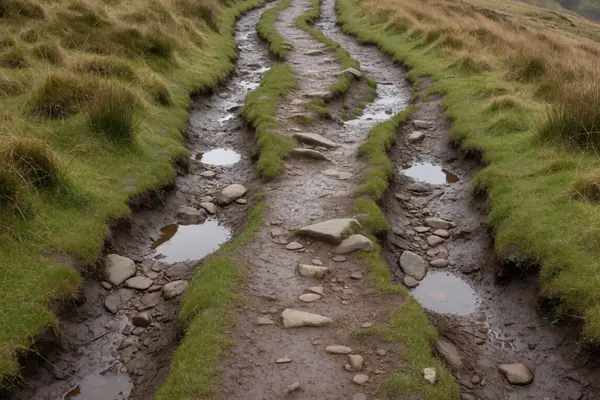
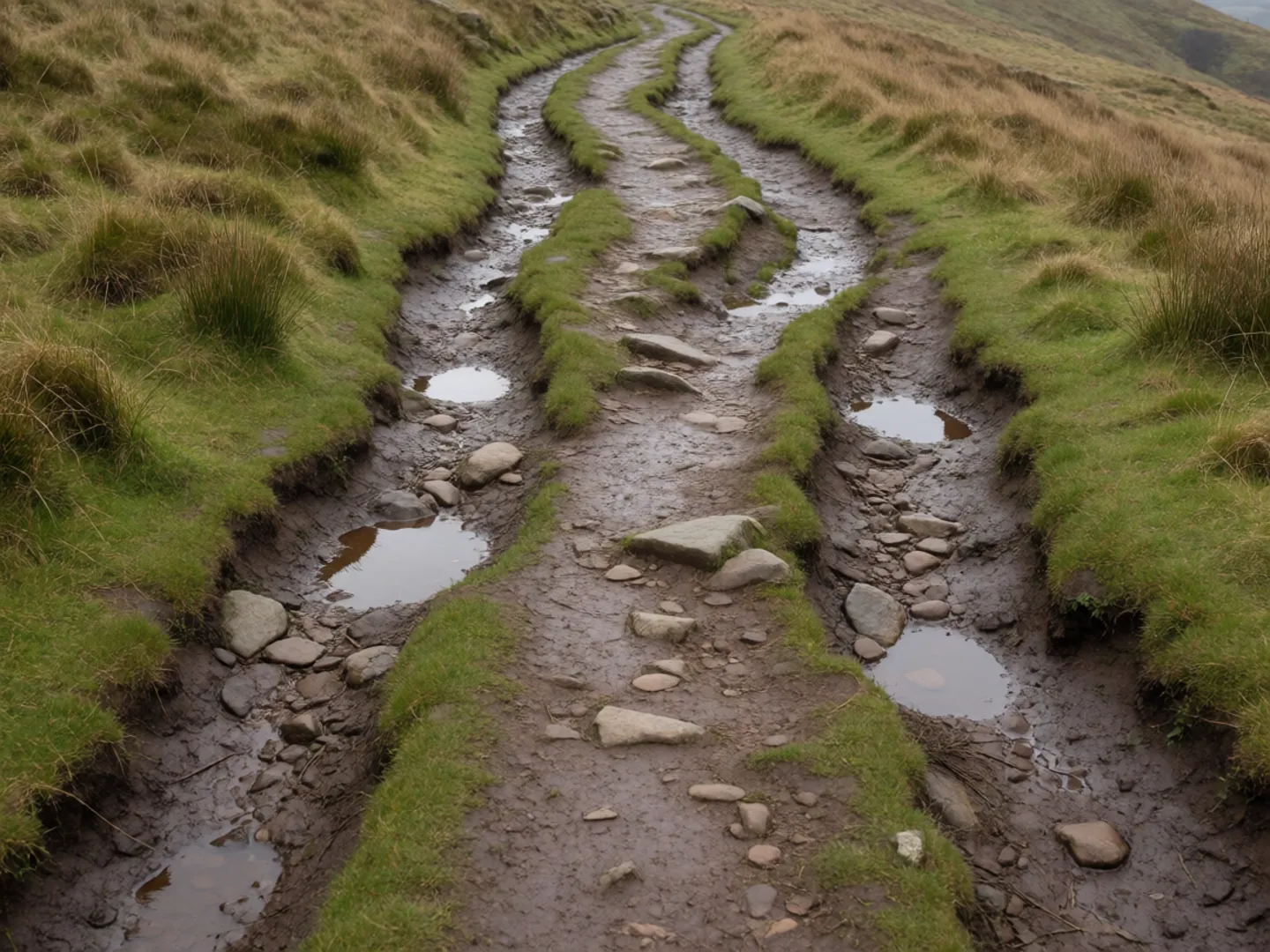
When grass is trampled the soil is exposed, and rain washes it away. Over time the path turns into a channel with water running down it.
Read a path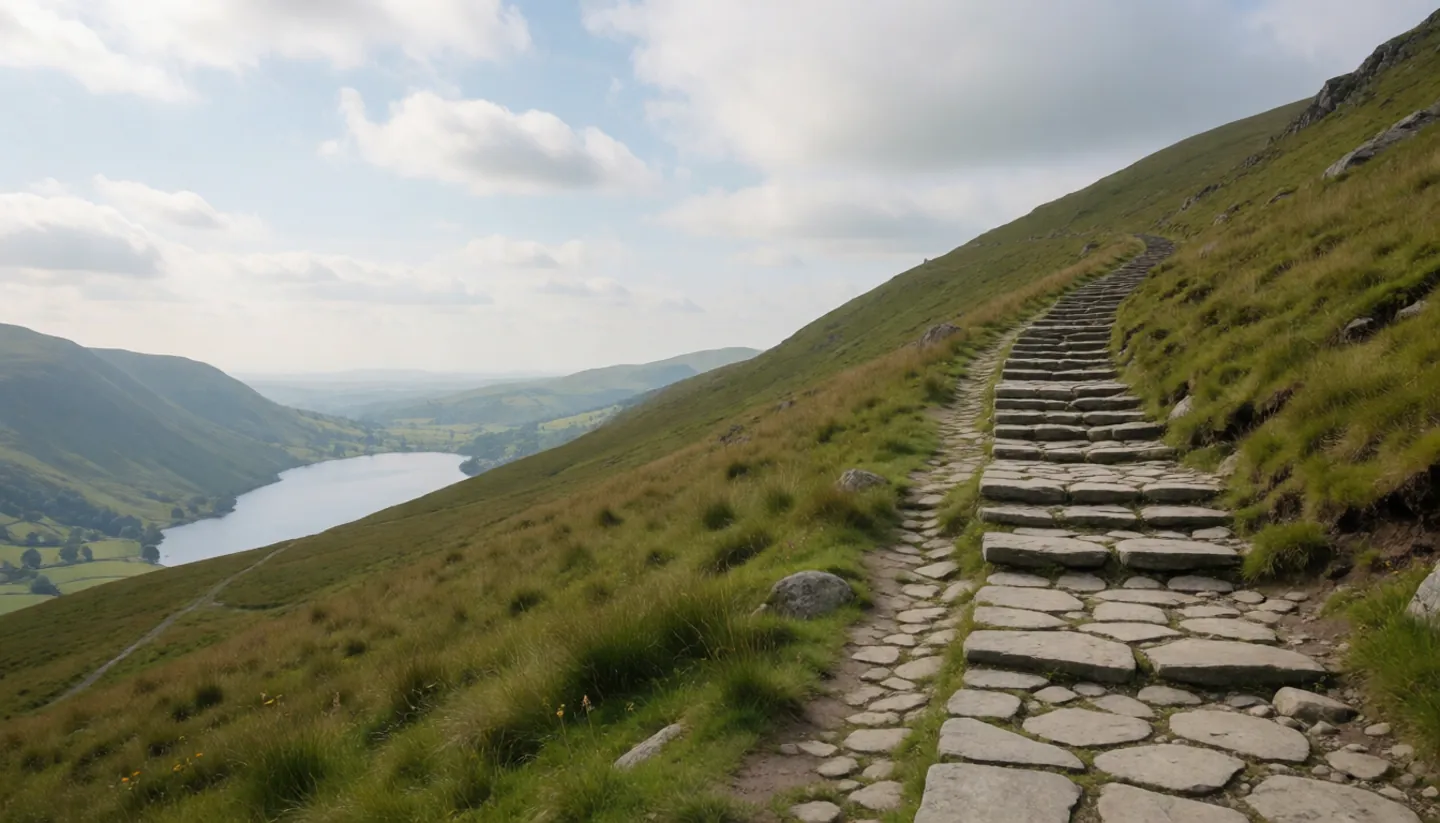
 streetlitewear
WEAR AND TEAR ON THE HILLS
STAY ON the path, even if muddy
Every pair of boots leaves a small mark.
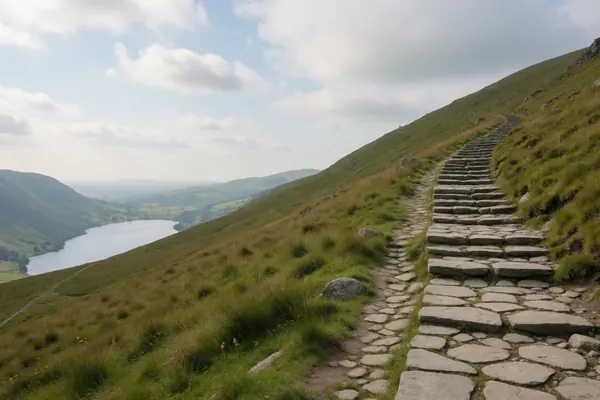
Multiply that by millions of walkers, add steep slopes and Lake District rain, and a grassy path can become a gully. Fix the Fells, run by the National Trust and the national park, repairs hundreds of upland paths.
Updated
Read a pathTHE SHORT ANSWER
Erosion starts with trampled vegetation.
Water and walkers do the rest.
HOW IT STARTS
When grass is trampled the soil is exposed, and rain washes it away. Over time the path turns into a channel with water running down it.
Read a pathHOW IT SPREADS
When a path gets hard to walk on, people step to the side, widening the scar. Fix the Fells says it can be seen from miles away.
See the numbersHOW IT IS FIXED
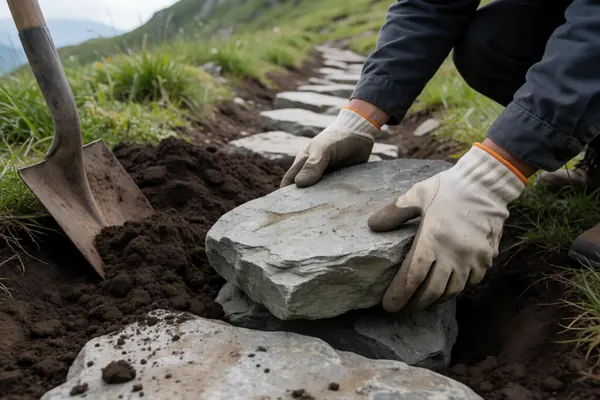
Rangers choose from stone pitching, drains, soil inversion, turf and even sheep's wool, depending on soil, slope and how busy the path is.
The techniquesA QUICK PATH CHECK
Pick what you see on a hill path to learn what is happening and how rangers usually respond. The bar shows how serious the damage is.
Based on Fix the Fells' description of path repair techniques in the Lake District.
TWO NUMBERS WORTH KNOWING
One measure of unchecked damage,
one of the stone it takes to mend it.
30 m
Width of an unchecked scar
Left unchecked, erosion scars can become as wide as 30 metres and 4 metres deep, as happened at Coledale near Keswick.
EROSION SCAR · FIX THE FELLS
17,000 tonnes
Stone used in ten years
Fix the Fells used 17,000 tonnes of stone in the last ten years, taken from as close to each path as possible so repairs match the landscape.
STONE USED · FIX THE FELLS
Fix the Fells says one of the paths up Scafell Pike alone is used by over 100,000 people a year, and that by the 1960s some popular paths had quadrupled in width.
FOUR WAYS TO WALK LIGHTER
The Countryside Code and the people who repair the paths ask for the same small habits.
The Countryside Code says to stay on marked paths, even if they are muddy, unless wider access is available.
Stepping round wet or rough patches widens the path. Walk through the middle where it is safe.
Climbing over boundaries can cause damage and put livestock at risk, so use gates, stiles or gaps.
Fix the Fells has around 100 volunteers from Cumbria and beyond who help clear drains and maintain paths through the year.
AN OLD CRAFT
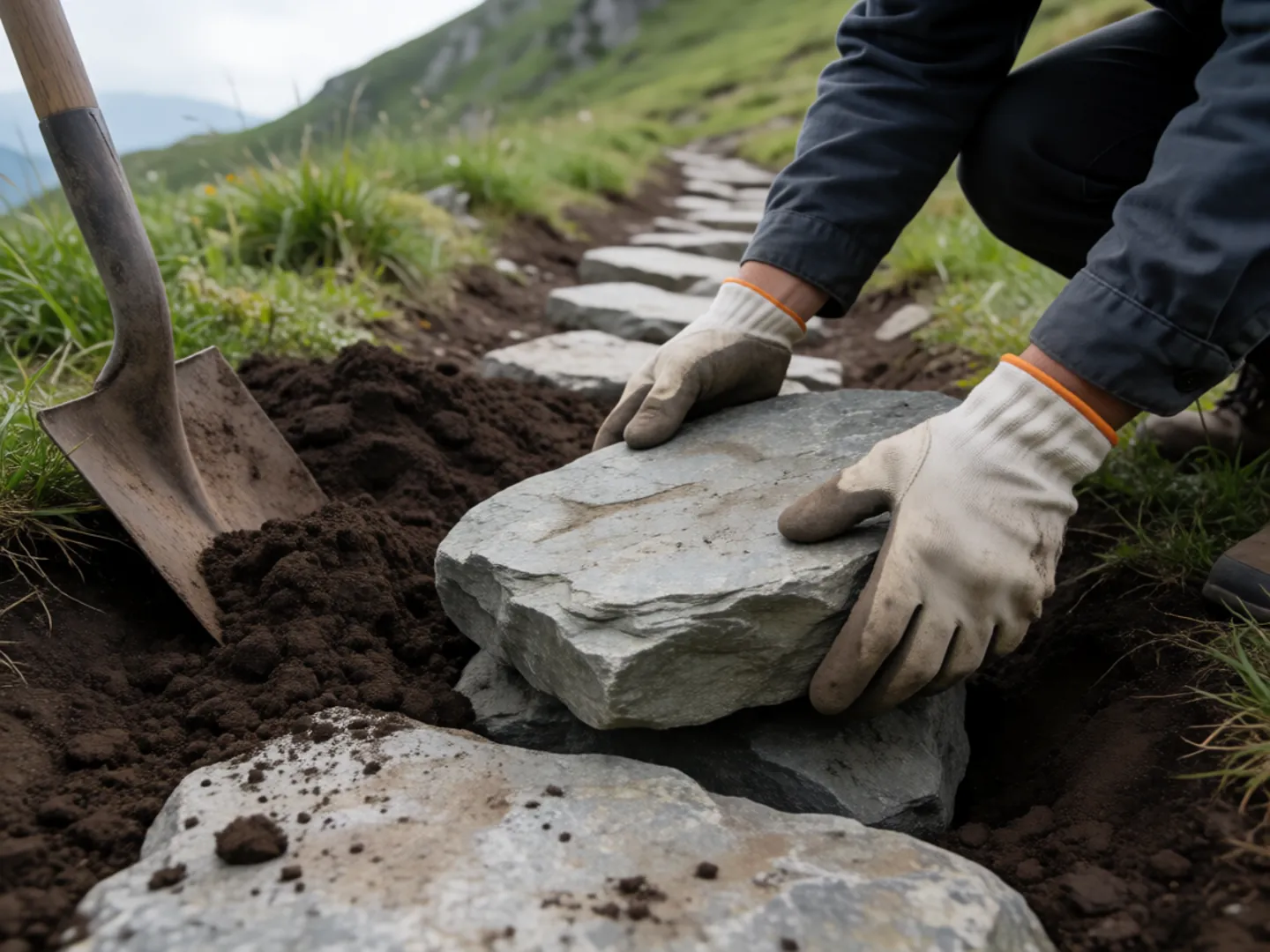
Erosion control is as old as pack horse routes and mining tracks. Soil inversion was used by the Romans. Stone-pitching has been adapted over time to make wet descents less slippery.
Fix the Fells began in 2001 and has repaired over 200 paths covering more than 400 km. In 2025, 147 volunteers gave 3,206 days to maintaining and repairing Lake District paths.
Questions
Trampling removes grass and vegetation, exposing the soil. Rain then washes it away, and the steepness of the path and the weather make it worse.
No. Walking at the side widens the damage. The Countryside Code says to stay on marked paths even if they are muddy, unless wider access is available.
Large local stones are set into the ground, flattened side up, to make small irregular steps. It looks natural and needs little maintenance.
On boggy or peaty ground, rolled fleeces form a 'floating path' under stones, protecting the peat while letting water drain.
Fix the Fells: teams of National Trust and Lake District National Park rangers, helped by volunteers, with partners including Natural England.
Sources
ABOUT THIS NAME
streetlitewear.com is part of the DoodleSale portfolio. It isn't in an auction right now, but you can ask about leasing it.